What Is the Alternative Learning System? A Complete Guide to ALS Meaning, Benefits, and Enrollment
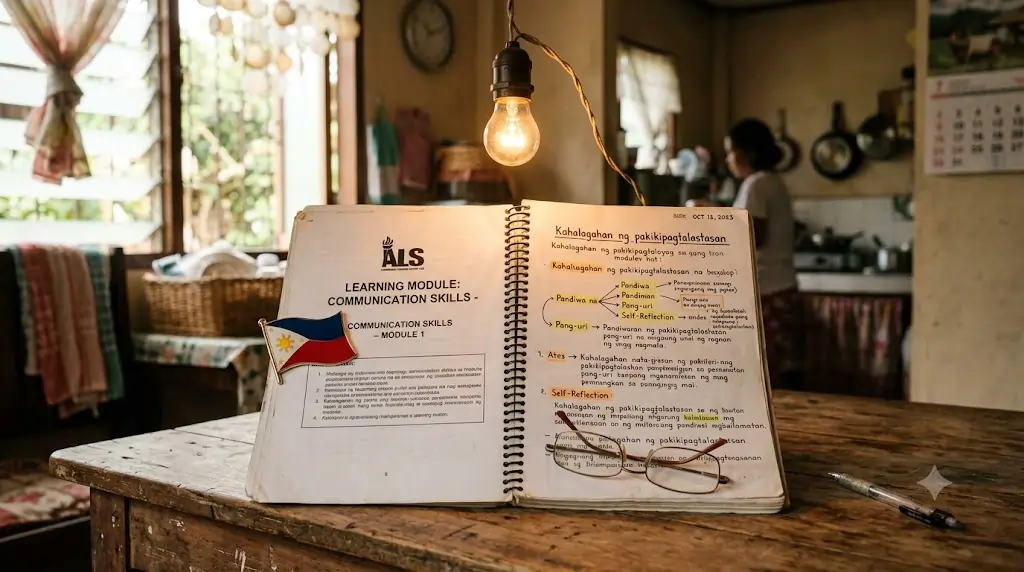
You left school years ago. Maybe work pulled you away. Maybe family responsibilities took over. Now you stare at job listings that demand a diploma you never earned.
That knot in your stomach feels permanent. The alternative learning system meaning points to something simple but powerful—a government-backed program that hands you a legitimate second chance at education, on your own terms, without stepping foot in a traditional classroom.
Understanding the Alternative Learning System Meaning in Simple Terms
The alternative learning system meaning refers to a parallel learning program designed by the Department of Education in the Philippines. It serves individuals who cannot access or complete formal schooling through the regular classroom setup.
ALS delivers flexible basic education to out-of-school youth, working adults, persons with disabilities, indigenous communities, and former rebels seeking reintegration into society.
This program covers elementary and junior high school levels. Learners attend community-based sessions, use self-learning modules, and take a final accreditation exam.
Passing that exam grants a certificate equivalent to a formal school diploma. The system removes rigid schedules, uniforms, and age limits. It replaces them with adaptable learning pathways that fit around work, parenting, and other real-life obligations.
| ALS Component | What It Means for Learners |
| Program Structure | Non-formal, community-based, modular learning |
| Target Learners | Out-of-school youth (15+), adults, workers, PWDs, indigenous peoples |
| Delivery Methods | Face-to-face sessions, printed modules, digital learning (ALS e-Skwela) |
| Assessment | Portfolio-based and ALS Accreditation & Equivalency Test |
| Certification | Elementary or Junior High School equivalency certificate |
| Governing Body | Department of Education, Bureau of Alternative Education |
Why the Alternative Learning System Exists and Who It Serves
Millions of Filipinos leave school every year. Poverty pushes teenagers into labor. Remote barangays lack nearby high schools. Teenage pregnancy interrupts education for young women. Armed conflict displaces entire communities. The alternative learning system meaning extends beyond a dictionary definition—it represents a deliberate government response to these deeply rooted barriers.
The Philippine Statistics Authority reported that in 2023, approximately 3.7 million Filipino children and youth remained out of school. ALS directly targets this gap. Mobile teachers travel to mountain sitios and coastal villages.
Learning centers are established by instructional supervisors under mango trees, in churches, and within village halls. Every learner receives materials matched to their current knowledge level, not their age.
ALS serves no single profile. A 40-year-old construction worker reviewing multiplication at night. A 16-year-old mother studying during her baby’s nap time. A 55-year-old grandmother finally learning to read. The system bends toward lives already in motion.
How ALS Differs from Formal Education
Formal schools follow a fixed calendar, daily schedules, and age-based grade levels. The alternative learning system meaning carries a fundamentally different approach. ALS operates on competency-based progression. Learners advance when they demonstrate mastery, not when a calendar flips to March.
Classroom teachers deliver standardized lessons to groups of 30 to 50 students. ALS facilitators work with smaller clusters, often 10 to 15 learners at varying levels. Sessions feel more like community conversations than lectures.
Materials include printed booklets, cassette-based audio lessons for remote areas, and digital content through the ALS e-Skwela platform launched in 2022.
Another major difference sits in the assessment method. Formal students take quarterly exams. ALS learners build portfolios throughout their learning period—writing samples, project outputs, attendance records, and facilitator observations.
This portfolio carries weight alongside the final Accreditation and Equivalency Test score. The Department of Education designed this dual assessment to capture growth that a single test might miss.
ALS Program Levels and Learning Strands Breakdown
The alternative learning system meaning becomes clearer when you examine the actual curriculum.Basic Literacy and the Accreditation & Equivalency Program are the two program levels covered by ALS.
The Basic Literacy track teaches functional reading, writing, and numeracy to complete non-readers. The A&E track prepares learners for elementary or junior high school equivalency certification.
The A&E curriculum is structured around six Learning Strands that are based on real-world, everyday applications while mirroring formal education subjects:
| Learning Strand | Focus Area | Life Application |
| LS1 – Communication Skills | English and Filipino language | Reading medicine labels, understanding contracts, writing job applications |
| LS2 – Scientific Literacy & Critical Thinking | Science concepts, reasoning | Evaluating health claims, understanding weather advisories, basic first aid |
| LS3 – Mathematical & Problem Solving Skills | Numeracy, computation | Budgeting income, calculating discounts, measuring materials for small business |
| LS4 – Life & Career Skills | Employment readiness, entrepreneurship | Creating resumes, identifying job opportunities, starting micro-enterprises |
| LS5 – Understanding Self & Society | Values, rights, responsibilities | Community participation, voting awareness, family health |
| LS6 – Digital Citizenship | Basic ICT skills, online safety | Using smartphones for learning, avoiding scams, accessing e-government services |
Each Learning Strand contains competencies arranged from basic to complex. A learner might complete LS3 at elementary level while working on LS1 at junior high level—progression happens individually across strands.
Step-by-Step ALS Enrollment Process
Getting into ALS requires fewer documents than formal school enrollment, but the process still follows specific steps. Knowing the alternative learning system meaning academically matters less than understanding how to actually join.
Step 1: Locate Your Nearest ALS Center
Visit the nearest public school, barangay hall, or DepEd division office. Ask for the ALS Coordinator or Mobile Teacher assignment. Rural areas often have scheduled visits from facilitators—community leaders typically know the schedule.
Step 2: Complete the Functional Literacy Test
New learners take a short assessment determining whether they need Basic Literacy or can proceed directly to A&E level. This test covers simple reading comprehension, writing, and basic math. No one fails this assessment—it simply places learners correctly.
Step 3: Attend the Orientation Session
Facilitators explain session schedules, module distribution, portfolio requirements, and exam timelines. Learners choose between morning, afternoon, or weekend sessions depending on facilitator availability.
Step 4: Receive Learning Materials
Printed modules come free of charge. Some centers offer tablet-based learning through ALS e-Skwela. Learners sign a simple acknowledgment form upon receiving materials.
Step 5: Begin Regular Sessions
Attendance remains flexible but consistent participation affects portfolio assessment. Most centers require 800 to 1,200 learning hours before A&E test eligibility.
Step 6: Build Your Portfolio
Learners compile written work, reflection journals, project outputs, and session attendance records. Facilitators review portfolios quarterly.
Step 7: Register for the A&E Test
Registration typically opens between May and July. The exam itself happens between November and February, varying by region. Learners submit registration forms through their ALS facilitator.
Step 8: Finish and Pass the A&E Test
The exam covers all six Learning Strands through multiple-choice questions and essay sections. Passing rates average 60-75% across recent years. Successful examinees receive certification approximately two to three months after the exam.
Accreditation and Equivalency Test: What to Expect
The A&E Test transforms the alternative learning system meaning from theory into a recognized credential. This examination follows a standardized format developed by the DepEd Bureau of Education Assessment.
For elementary level, test-takers answer around 200 multiple-choice items spanning five subject areas. Junior high school level includes approximately 250 items plus a written essay component.
Scores use percentage ratings. Elementary passers need at least 60% overall. Junior high level requires a minimum of 75% across all subjects with no failing grade in any single area. The essay receives separate scoring based on content relevance, organization, language use, and mechanics.
Test centers operate inside public schools nationwide. DepEd assigns testing rooms based on learner proximity. Special accommodations exist for persons with disabilities, including extended time, large-print test booklets, and separate rooms with support assistants.
Success brings tangible results. The certification document carries the DepEd seal and signature of the Schools Division Superintendent.
Universities, technical-vocational schools, and employers recognize it for enrollment and hiring purposes.Over 700,000 students passed the A&E Test between 2017 and 2023, with about 200,000 of them continuing on to higher education, according to DepEd data.
ALS e-Skwela and Digital Learning Expansion
Technology reshapes the alternative learning system meaning as DepEd pushes digital integration. ALS e-Skwela launched nationally in 2022 after pilot testing in select regions.
This platform delivers digitized learning modules accessible through smartphones, tablets, and computers. Learners without devices can access content through community learning hubs equipped with DepEd-provided tablets.
The platform includes video lectures made by DepEd teachers, interactive examinations with instant response, downloadable PDF modules for offline use, and discussion boards overseen by ALS facilitators.
Early data from the Bureau of Alternative Education shows that e-Skwela learners complete modules 30% faster than print-only counterparts, though digital access gaps remain a challenge in remote communities without reliable internet.
Google Philippines partnered with DepEd in 2023 to provide free access to ALS digital content through Google Play Store featured sections and YouTube learning playlists.
Smart Communications and Globe Telecom both zero-rate data charges for e-Skwela browsing, meaning learners consume no mobile data while using the platform.
Real Stories: How ALS Changes Lives
Understanding the alternative learning system meaning requires looking past definitions into actual human outcomes. Rowena, a 34-year-old domestic worker from Cebu, stopped attending school at age 12 when her father fell ill.
She completed ALS junior high certification in 2021 after 14 months of weekend sessions. She now works as a hotel front desk clerk—a position that required a high school diploma.
Eduardo, 52, spent 28 years as a fisherman in Samar before attending Basic Literacy classes through ALS.
He learned to read at age 49. He now manages a small community savings group, maintaining written records independently. “I signed my name for the first time on a bank document at 50,” he told his facilitator. “That signature meant I existed.”
Jasmine, a 19-year-old from Marawi City, fled her home during the 2017 siege. She missed three years of schooling. ALS facilitators reached her evacuation center in 2019. She passed the junior high A&E Test in 2022 and enrolled in a state university’s social work program the following semester.
These stories repeat across the Philippines’ 17 regions. The Department of Education maintains a public database of ALS passers who transitioned to higher education or formal employment. The system tracks outcomes, not just completions.
Common Challenges ALS Learners Face
Honest discussion of the alternative learning system meaning includes acknowledging the difficulties. ALS learners juggle responsibilities that formal students rarely face. Employment demands shift schedules unpredictably. Childcare falls entirely on single parents. Some learners walk two hours each way to reach learning centers.
Module-based learning requires self-discipline. Without daily classroom accountability, some learners fall behind. Weather conditions in agricultural communities dictate attendance patterns—planting and harvest seasons see sharp drops in session participation. Facilitators address this through home visits and adjusted timelines.
Resource constraints affect program delivery. Not every community center has electricity. Some facilitators manage caseloads exceeding 80 learners spread across multiple barangays.
Learning materials sometimes arrive months late due to procurement delays. DepEd continues expanding facilitator hiring, adding 2,000 new ALS positions in the 2024 national budget.
External source: The Philippine Institute for Development Studies published a comprehensive assessment of ALS implementation challenges in 2023, available through their Discussion Paper Series (DP 2023-15), documenting resource gaps and recommending policy adjustments for improved delivery.
ALS vs. Other Alternative Education Pathways
The alternative learning system meaning sometimes gets confused with other flexible education options. Here is how ALS compares:
| Program | Provider | Recognition | Best For |
| ALS A&E | DepEd | Formal diploma equivalency | Out-of-school youth, adults needing elementary or JHS credential |
| Open High School | DepEd | Regular high school diploma | Students who dropped out but are able to rejoin on a part-time basis |
| Homeschooling | DepEd-accredited providers | Regular school diploma | Families choosing home-based education from start |
| Technical-Vocational | TESDA | National Certificate | Skills-focused learners seeking immediate employment |
| Night High School | Local public schools | Regular high school diploma | Working students available during evenings |
ALS differs because it specifically targets those already outside the system, not those seeking an alternative starting point. It meets learners where they stand and builds forward.
External source: The UNESCO Institute for Lifelong Learning recognizes ALS-type programs globally as effective second-chance education models, documented in their 2022 Global Report on Adult Learning and Education.
Frequently Asked Questions:
What exactly does alternative learning system meaning refer to?
The alternative learning system meaning refers to a Philippine Department of Education program delivering non-formal basic education to individuals who cannot attend regular schools.
It provides flexible learning pathways leading to elementary or junior high school equivalency certification through community-based sessions and a final accreditation exam.
Who qualifies for ALS enrollment?
Any Filipino citizen aged 15 or older who has not completed elementary or junior high school through formal education qualifies for ALS. No maximum age exists. The program welcomes out-of-school youth, working adults, persons with disabilities, indigenous peoples, former combatants, and individuals deprived of liberty.
How long does ALS take to complete?
Completion time varies by learner pace and prior knowledge. Basic Literacy programs typically require 6 to 10 months. Elementary A&E level takes approximately 10 to 14 months. Junior high school A&E level needs about 12 to 18 months of consistent attendance. Fast learners can finish sooner through dedicated self-study.
Is the ALS diploma accepted by colleges and employers?
Yes. The ALS Accreditation and Equivalency certificate holds full legal recognition equivalent to a formal school diploma.
The Commission on Higher Education mandates all colleges and universities to accept ALS certification for admission. Employers in government and private sectors recognize it for hiring and promotion purposes under Republic Act 9155.
How much does ALS cost?
ALS programs through DepEd cost nothing. All learning modules, session attendance, portfolio assessment, and the A&E Test come free of charge. Some private organizations offer ALS-aligned programs with associated fees, but the government system remains fully subsidized.
Can ALS learners proceed to senior high school and college?
Absolutely. The normal DepEd voucher program allows junior high school A&E passers to enroll in senior high school.
ALS certification carries the same weight as a formal Grade 10 completion certificate. Many ALS graduates currently attend state universities, private colleges, and technical-vocational institutions nationwide.
Why ALS Matters for Philippine Development
The alternative learning system meaning carries national implications beyond individual stories. The Philippine Development Plan 2023-2028 identifies human capital development as a core economic strategy. ALS contributes directly by bringing education to populations that formal systems miss—populations that represent untapped productive capacity.
Every ALS graduate who gains employment contributes to household income and tax revenue. Every ALS passer who enters college builds professional capacity in sectors facing shortages, particularly education and healthcare in underserved areas.
The National Economic and Development Authority estimates that closing the out-of-school youth gap through programs like ALS could add 1.2 percentage points to annual GDP growth through increased labor productivity.
External source: The World Bank Philippines Economic Update (October 2023) discusses the relationship between alternative education completion rates and poverty reduction, noting that second-chance education programs correlate with measurable household income improvements within three years of certification.