What Is Skink Meaning? A Complete Guide to These Smooth-Scaled Lizards
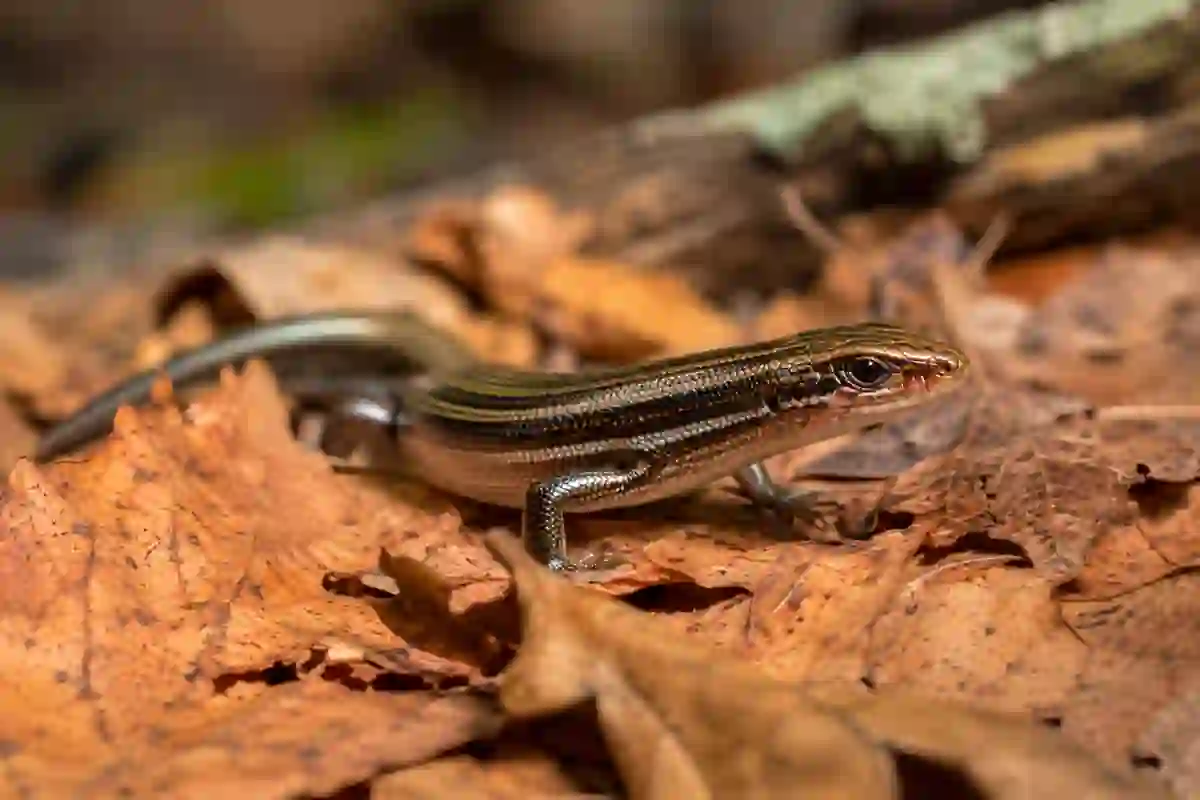
Picture a lizard that looks almost like a snake with tiny legs. That sleek, shiny creature darting through dry leaves is likely a skink. But skink meaning goes far beyond just another backyard reptile.
These smooth-scaled survivors have mastered the art of blending in, shedding tails and thriving across six continents. Whether you spotted one in your garden or stumbled upon the term while reading, understanding skink meaning opens a window into one of nature’s most adaptable lizard families.
What Is Skink Meaning Exactly?
The word skink comes from the Latin scincus, which referred to a specific North African lizard prized in ancient medicine. Today, skink meaning refers to any lizard belonging to the family Scincidae, the largest lizard family on Earth with over 1,500 known species.
Unlike their rough-scaled cousins, skinks possess smooth, overlapping scales that give them a polished, almost wet appearance. Most people mistake them for snakes at first glance, especially the legless or reduced-limb varieties. However, skinks are true lizards with eyelids and external ear openings, features snakes completely lack.
The skink meaning in biological terms centers on their cylindrical body shape and reduced limb size. Evolution favored this body plan for burrowing and navigating tight spaces under rocks and logs.
When someone asks about skink meaning, biologists point to their unique osteoderms, tiny bony plates under the scales that provide armor-like protection without sacrificing flexibility. This combination of speed, armor and stealth makes skinks remarkably successful across diverse environments.
Where Did the Name Skink Originate?
Tracing the skink meaning through history takes us back to ancient Greek and Latin texts. The Greeks used a similar word for the Schneider’s skink, a North African species traded along Mediterranean routes.
Arab merchants later introduced dried skinks to Chinese medicine, where practitioners believed these lizards held healing properties. By the 16th century, European naturalists adopted the term formally, and skink meaning entered scientific literature permanently.
Carl Linnaeus, the father of modern taxonomy, classified several skink species in his 1758 Systema Naturae. Since then, researchers have expanded skink meaning to encompass an incredible diversity of forms. From the tiny garden skinks of Australia to the massive blue-tongued skinks of Indonesia, the name now covers a vast evolutionary tree spanning millions of years.
Physical Characteristics That Define Skink Meaning
Understanding skink meaning requires examining their distinctive anatomy. Skinks feature smooth, shiny scales arranged in overlapping rows that reduce friction during burrowing. Their bodies sit low to the ground, with short legs or sometimes no legs at all.
The tail functions as both a sacrificial escape route and an organ for storing fat. When grabbed, many skinks detach their tails, which continue wriggling to distract predators while the skink escapes.
The skink meaning becomes clearer when you look at their heads. Skinks possess conical heads with blunt snouts, perfectly shaped for pushing through loose soil. Their teeth are pleurodont, meaning they fuse to the inner jawbone rather than sitting in sockets.
This dental arrangement helps them crush insects and small invertebrates with efficiency. Coloration varies wildly between species. Some skinks flash brilliant blue tongues, others sport copper-brown bodies with racing stripes, and a few tropical species shimmer with iridescent scales that shift colors under sunlight.
10 Most Fascinating Skink Types Worldwide
The depth of skink meaning reveals itself through the sheer variety of species:
1. Blue-Tongued Skink (Tiliqua)
Native to Australia and Indonesia, these robust skinks flash a cobalt-blue tongue to startle predators. They grow up to 24 inches and adapt well to captive care.
2. Five-Lined Skink (Plestiodon fasciatus)
Common across eastern North America, juveniles sport a vivid blue tail that fades with age. They frequent wooded areas and stone walls.
3. Sandfish Skink (Scincus scincus)
The species that originally defined skink meaning in ancient texts. These Saharan dwellers literally swim through loose sand using wave-like body motions.
4. Prehensile-Tailed Skink (Corucia zebrata)
The largest known skink, reaching 32 inches. Found only in the Solomon Islands, they use their grasping tails to navigate tree canopies.
5. Fire Skink (Lepidothyris fernandi)
West African beauties with flame-red flanks and golden backs. Their striking colors make them popular in the pet trade.
6. Garden Skink (Lampropholis)
Tiny, quick and abundant in Australian gardens. These diminutive skinks eat pest insects and thrive near human habitation.
7. Schneider’s Skink (Eumeces schneideri)
The historical species that shaped early skink meaning in Mediterranean and Asian trade. Sandy-colored with distinctive longitudinal stripes.
8. Western Skink (Plestiodon skiltonianus)
North American natives with bright blue tails as juveniles. They prefer moist habitats near streams and forests.
9. Shingleback Skink (Tiliqua rugosa)
Also called the bobtail lizard, this Australian oddity has a broad, stumpy tail resembling its head, confusing predators about which end to attack.
10. Crocodile Skink (Tribolonotus)
New Guinea natives with armor-like dorsal scales that mimic crocodilian features. They vocalize when distressed, a rare trait among lizards.
Where Do Skinks Live? Global Habitats
Skink meaning extends across every continent except Antarctica. These adaptable reptiles inhabit rainforests, deserts, grasslands, suburban gardens and rocky mountainsides. Australia hosts the greatest skink diversity, with over 400 native species occupying every conceivable niche. North America supports relatively fewer species, primarily in the Plestiodon genus.
Desert skinks like the sandfish have evolved remarkable heat tolerance and sand-swimming abilities. Forest skinks prefer the humid leaf litter layer, where they hunt insects under decaying logs. Urban skinks exploit garden beds, compost heaps and retaining walls, living surprisingly close to humans without detection. The secret to their worldwide success lies in their unspecialized insectivorous diet and their ability to thermoregulate by shuttling between sun and shade patches.
Behavior and Daily Life Patterns
Most skinks are diurnal, meaning they stay active during daylight hours. They spend mornings basking on warm rocks to raise body temperature, then alternate between hunting and resting throughout the day. The skink meaning as a prey animal shaped their cautious behavior. They move in short, explosive bursts, freezing between sprints to avoid detection.
Skinks communicate primarily through chemical signals called pheromones. Males track females by tongue-flicking substrate chemicals to the Jacobson’s organ in the roof of their mouth. Territorial disputes involve head-bobbing displays, tail waving and occasional biting. During breeding seasons, some male skinks develop bright throat colors to signal dominance and attract mates.
What Do Skinks Eat? Diet and Hunting
Skinks feed predominantly on invertebrates. Crickets, beetles, spiders, snails and earthworms form the bulk of their diet. Larger species like blue-tongued skinks add plant matter, flowers, berries and even small vertebrates to their menu. The skink meaning as an insectivore positions them as valuable pest controllers in gardens and agricultural areas.
Hunting strategy relies on vision and speed. A skink spots moving prey, freezes to calculate distance, then lunges with surprising acceleration. Small prey gets swallowed immediately. Larger or struggling prey gets crushed repeatedly against the ground before consumption. Some desert skinks have specialized nasal passages that filter fine sand particles while breathing near the surface during sand-swimming hunts.
Life Cycle and Reproduction
Skink meaning deepens when exploring their reproductive diversity. Most skinks are oviparous, laying leathery-shelled eggs in moist soil or rotting wood. Females of many species guard their clutches, coiling around eggs to maintain humidity and deter egg-eating predators. Some species, including the blue-tongued skink, give birth to live young through ovoviviparity, where eggs hatch internally.
Clutch sizes range from two to over twenty eggs depending on species and female body size. Incubation typically spans six to eight weeks. Hatchlings emerge fully independent, receiving no parental care beyond the egg-guarding phase. Juvenile skinks face heavy predation pressure. Those that survive their first year, where skink meaning shifts from vulnerable prey to established resident, can live five to fifteen years depending on species.
Skinks as Pets: Care Essentials
Several skink species thrive in captivity when properly cared for. Blue-tongued skinks lead the popularity rankings due to their docile nature and manageable size. Fire skinks and Schneider’s skinks also appear regularly in the pet trade. Prospective owners must research species-specific requirements before acquisition.
A proper skink enclosure needs a temperature gradient from 75°F on the cool end to 95°F at the basking spot. UVB lighting proves essential for calcium metabolism and preventing metabolic bone disease. Substrate should allow natural burrowing behavior. Coco fiber, cypress mulch or bioactive soil mixes work well for most species. Diet includes gut-loaded insects, leafy greens, quality commercial skink diets and occasional fruit treats.
Conservation Status and Threats
Many skink species face significant conservation challenges. Habitat destruction, invasive predators and climate change threaten populations worldwide. The Cape Verde giant skink, once abundant on its island home, went extinct by the early 20th century due to introduced rats and cats. Several Australian skinks cling to survival on predator-free offshore islands.
Conservation efforts focus on habitat preservation, invasive species control and captive breeding programs. The blue-tailed skinks of Christmas Island exist now only in captivity after wolf snake introduction decimated wild populations. Understanding skink meaning includes recognizing our responsibility to protect these ancient survivors before more species disappear forever.
Ecological Role: Why Skinks Matter
Skink meaning in ecological terms translates to balance. As mid-level consumers, skinks regulate insect and spider populations while serving as prey for birds, snakes and small mammals. Their burrowing activities aerate soil and aid decomposition. In some ecosystems, skinks act as seed dispersers after consuming fruits and berries.
The disappearance of skinks from an ecosystem triggers cascading effects. Insect populations explode unchecked, soil turnover decreases, and predators lose a reliable food source. These smooth-scaled lizards function as biological indicators. Healthy skink populations signal a functioning ecosystem with intact food webs and minimal chemical contamination.
Frequently Asked Questions About Skink Meaning
What is the exact skink meaning in biology?
Skink meaning in biology describes any lizard belonging to the family Scincidae. These reptiles are characterized by smooth overlapping scales, reduced limbs in many species, and a cylindrical body adapted for burrowing through leaf litter and loose soil.
Are skinks dangerous to humans?
No skink species poses any danger to humans. Skinks lack venom and possess extremely weak jaws. At most, a large blue-tongued skink might deliver a startling but painless pinch if roughly handled. They prefer fleeing over fighting.
What is the skink meaning difference from regular lizards?
The primary differences lie in scale texture and body proportions. Skinks have smooth, glossy scales instead of rough, keeled ones. Their limbs are proportionally shorter, and their bodies appear more elongated and cylindrical than typical garden lizards.
Where does the word skink come from?
The word traces back through Latin scincus to ancient Greek skinkos, both referring to North African skink species traded in Mediterranean markets for supposed medicinal uses.
Do all skinks lose their tails?
Most skink species possess caudal autotomy, the ability to self-detach their tail when threatened. The tail regenerates over months but typically grows back shorter, darker and structurally different from the original.
How can I attract skinks to my garden?
Provide ground cover like rocks, logs and dense low-growing plants. Avoid pesticides that eliminate their insect prey. A shallow water dish and patches of leaf litter create ideal skink habitat in suburban yards.
Protecting Our Scaled Neighbors
Skink meaning ultimately connects to coexistence. These glossy lizards ask nothing of us except space to hunt, bask and reproduce. Whether you encounter a blue-tailed juvenile racing across a hiking trail or hear the dry rustle of a garden skink in your flowerbed, pause and appreciate the evolutionary success story before you. Create skink-friendly corners in your outdoor spaces.
Leave fallen logs where they lie. Reduce chemical use in your garden maintenance routine. Small actions accumulate into meaningful habitat preservation. The smooth-scaled survivors have adapted to Earth’s changes for millions of years. With thoughtful stewardship, they can continue thriving alongside us for generations to come.