7 Proven En Dash Rules Every Writer Must Know in 2025
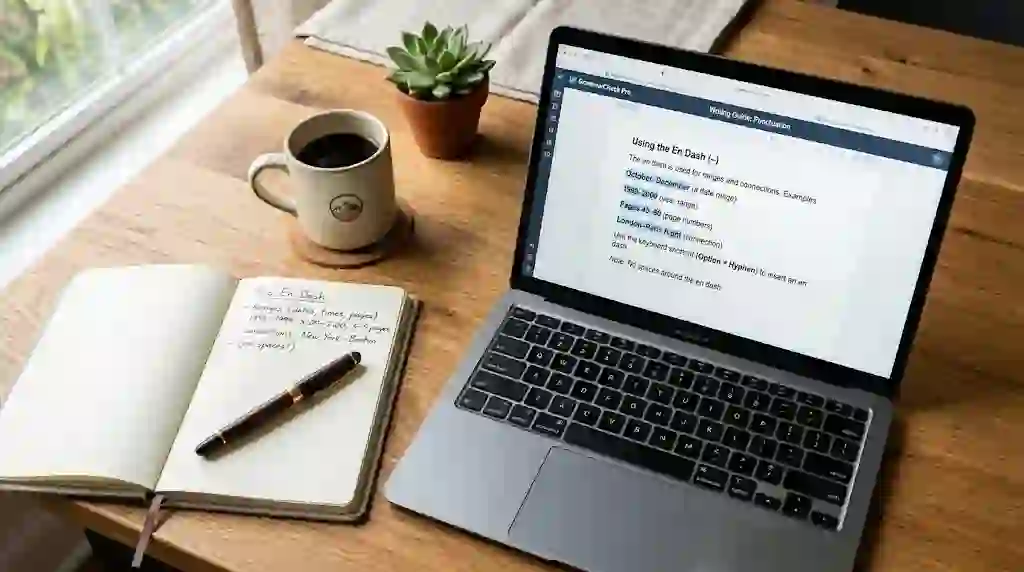
Most writers confuse the en dash with a regular hyphen every single day, and they do not even realize it. This tiny punctuation mistake quietly makes your content look amateur to sharp-eyed readers and professional editors.
The en dash is arguably the most misunderstood mark in all of English grammar, yet mastering it genuinely takes less than ten minutes of focused effort.
Stick around because I will break down exactly when, where, and how to use the en dash correctly so your writing instantly looks polished, credible, and publication-ready across every platform you publish on.
What Exactly Is an En Dash?
The en dash is a horizontal punctuation mark that sits right between a hyphen and an em dash in physical length. Its name comes directly from traditional typography because it roughly matches the width of the uppercase letter “N” in any given typeface.
You will spot the en dash most often connecting ranges of numbers, dates, scores, and time periods. Think of the en dash as the silent replacement for the words “to” or “through” in written English.
Unlike the basic hyphen, the en dash carries a very specific grammatical purpose that goes far beyond simply joining compound words together on the page.
En Dash vs Hyphen vs Em Dash
Writers mix up these three marks constantly, so let me clear the confusion once and for all. The hyphen (-) is the shortest mark and joins compound words like “well-known” or “long-term.”
The en dash (–) is slightly longer and connects ranges or relationships between equal elements. You use the en dash for things like “pages 10–25” or “the New York–London flight route.”
The em dash (—) is the longest of all three punctuation marks. It replaces commas, colons, or parentheses to create dramatic pauses in a sentence.
Keeping these three marks straight will instantly elevate the overall quality of your published writing.
When to Use the En Dash Correctly
The en dash shines in a handful of specific situations that most major style guides agree on. The single most common use of the en dash is showing number ranges in any type of content.
For example, you would write “2020–2025” or “chapters 5–12” with an en dash, never with a basic hyphen. The en dash silently replaces the word “to” or “through” without adding extra clutter to your sentence.
You also use the en dash for score ranges in sports reporting, like “the home team won 3–1 on Saturday night.” Dates work the exact same way, so “June–August” is the correct professional format.
En Dash in Number and Date Ranges
This is where the en dash does its absolute heaviest lifting in everyday writing. Any time you write a span of numbers, dates, or specific times, the en dash is your go-to punctuation mark.
Write “Monday–Friday,” “9:00 AM–5:00 PM,” or “50–100” with a clean en dash every single time. Using a standard hyphen in these situations is technically incorrect and immediately noticeable to trained editors.
En Dash in Compound Adjectives
A lesser-known but equally important use of the en dash appears in complex compound adjectives. When one part of your compound modifier is already hyphenated, the en dash steps in to avoid visual confusion.
For instance, “post–World War II” uses an en dash because “World War II” is a multi-word element. A simple hyphen would make the phrase harder to read and grammatically unclear.
How to Type an En Dash on Any Device
Typing the en dash trips up even experienced writers because it does not have a dedicated physical key on most standard keyboards. On a Windows PC, hold the Alt key and type 0150 on the numeric keypad to produce an en dash character instantly.
Mac users have it significantly easier. Simply press Option + Minus to insert the en dash wherever your cursor currently sits in the document.
On mobile devices, long-press the hyphen key on your virtual keyboard and slide your finger to the en dash option. Google Docs and Microsoft Word also auto-convert spaced hyphens into an en dash in many common typing situations.
Common En Dash Mistakes to Avoid
The biggest en dash mistake writers make is swapping it with a hyphen in number and date ranges. Writing “2020-2025” with a basic hyphen looks genuinely sloppy to editors and careful readers who notice these details.
Another frequent en dash error is adding unnecessary spaces around it in ranges. The en dash should sit completely flush against both numbers or words with absolutely no gaps on either side.
Some writers also overuse the en dash in simple compound adjectives where a basic hyphen would work perfectly fine. Reserve the en dash strictly for its specific grammatical jobs and nothing else.
En Dash Usage Quick Comparison Table
Here is a clean visual breakdown showing exactly when each dash type belongs in your writing. Keep this en dash reference table handy as a quick guide.
| Punctuation Mark | Symbol | Length | Primary Use | Correct Example |
| Hyphen | – | Shortest | Compound words | well-known author |
| En Dash | – | Medium | Ranges and connections | 2020–2025 |
| Em Dash | — | Longest | Dramatic pauses | She left—without warning |
The en dash occupies the middle ground both visually and functionally. Once you internalize this comparison, choosing the right mark becomes effortless and automatic.
Final Thoughts on Mastering the En Dash
The en dash might seem like a tiny detail, but getting it right separates professional writers from careless amateurs. Start replacing those incorrect hyphens in your ranges, dates, and scores today.
Your readers will notice the extra polish, and your content will carry noticeably more authority across every platform. Bookmark this en dash guide and keep it handy the next time you sit down to write something truly worth publishing.