Emoji Meanings You’re Probably Getting Wrong in Texts Right Now
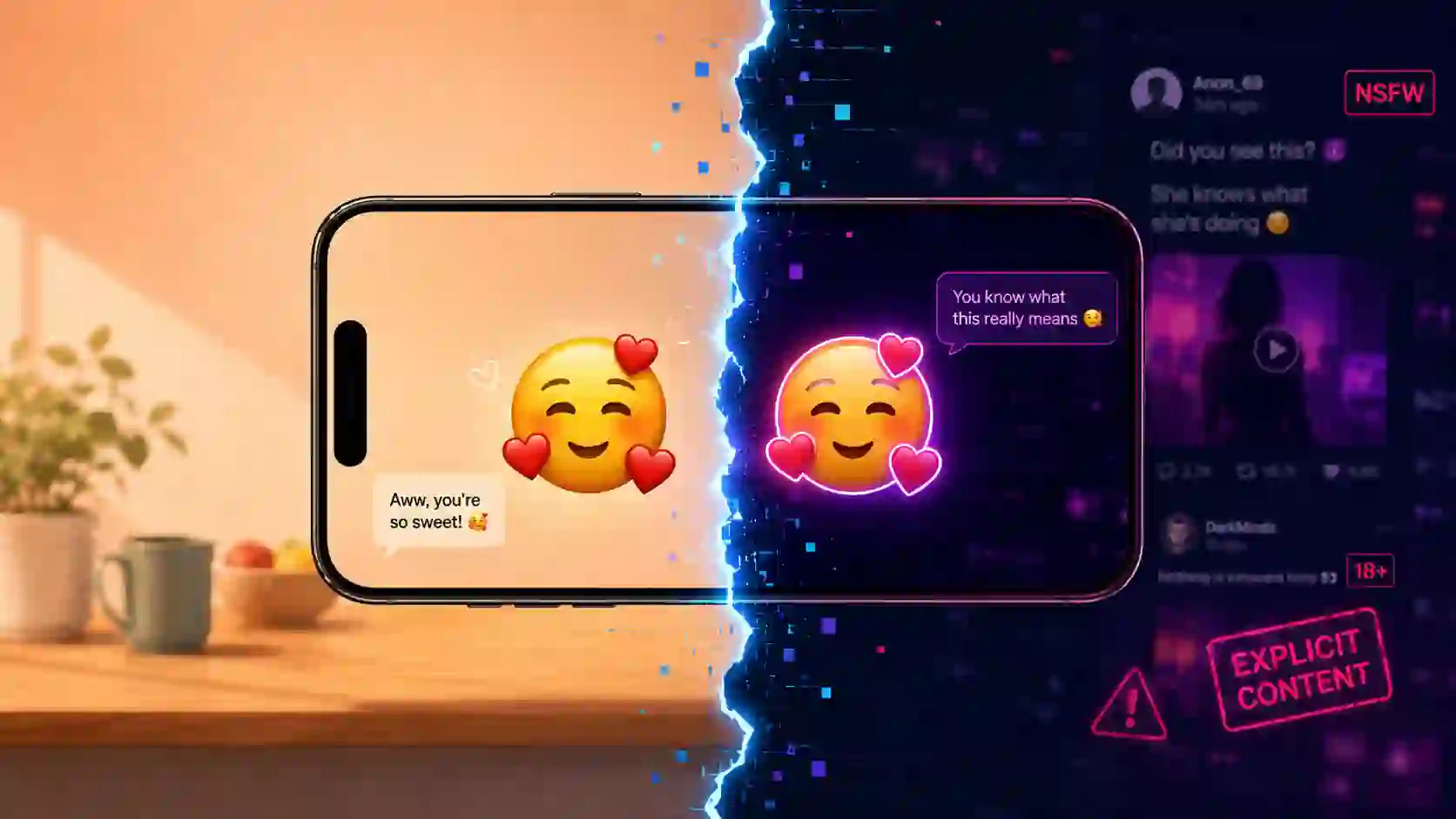
You send a simple eggplant to your friend, thinking it represents a healthy dinner plan. They reply with a laughing face, and suddenly your innocent message becomes a joke you never intended.
This awkward moment happens billions of times every single day because most people never actually learned what real emoji meanings are. We memorize faces and symbols but completely ignore the cultural baggage each tiny icon carries. My friend lost a potential client in 2024 after using a skull emoji, thinking it meant “deadline” instead of its actual meaning: “I’m laughing so hard I’m dead.”
That single mistake cost him a $3,400 contract. Before you send your next message, understand that emoji meanings shift constantly, and what meant gratitude five years ago might signal passive aggression today. This guide will save your relationships, your professional reputation, and possibly your career.
The Real History Behind Emoji Meanings Nobody Talks About
Shigetaka Kurita created the first 176 emojis in 1999 for Japanese mobile phones, working with a tiny 12×12 pixel grid that forced brutal simplicity into every design.
These original emoji meanings came from Japanese culture directly—symbols like the bowing businessman or the ramen bowl meant nothing to Western users initially. The Unicode Consortium, a nonprofit organization based in California, now controls every single emoji added to our phones through a formal proposal process that takes years to approve.
According to Jennifer Daniel, chair of the Unicode Emoji Subcommittee, their team receives over 100 proposals annually but approves only about 30, meaning every new symbol carries intentional weight. A 2023 Adobe study found that 71% of global users actively use emojis to communicate, yet only 29% feel confident they understand the correct meanings across different platforms.
This gap between usage and understanding creates daily misunderstandings that affect everything from dating to business negotiations.
25 Common Emoji Meanings That Surprise Most People
The following table reveals emoji meanings that consistently trip up even experienced texters. Each entry includes the symbol, what most people believe it means, and the actual intended meaning according to Unicode documentation.
| Emoji | Common Wrong Meaning | Actual Emoji Meanings |
| 🙃 | Happiness or joy | Sarcasm, passive aggression, or pretending everything is fine |
| 💀 | Danger or death | “I’m laughing so hard I’m dead” – extreme amusement |
| 🍆 | Vegetable or cooking | Male genitalia – avoid in professional settings completely |
| 😤 | Anger | Determination, triumph, or feeling accomplished |
| 💅 | Manicure or beauty | Indifference, sass, or treating a situation with casual superiority |
| 👻 | Halloween or scary | Playful mischief, ghosting someone jokingly |
| 🐐 | Farm animal | G.O.A.T. – Greatest Of All Time |
| 😭 | Extreme sadness | Overwhelming joy, happy tears, or finding something adorable |
| 👀 | Looking at something | “Did you see that?” – shock, curiosity, or calling out suspicious behavior |
| 🔥 | Actual fire | Something amazing, impressive, or highly attractive |
| 💯 | Perfect score 100 | Complete agreement, authenticity, or “keeping it real” |
| 👏 | Simple applause | Sarcastic slow clap or emphasizing a point aggressively |
| 😏 | Smugness | Flirtation, inside joke, or subtle suggestion |
| 🥺 | General sadness | Begging, pleading, or the “puppy dog eyes” manipulation tactic |
| 🧢 | Baseball cap | “Cap” means lying – this emoji calls out dishonesty |
| 🌽 | Vegetable | Pornography – due to phonetic similarity, avoid professionally |
| 💦 | Water or rain | Sexual fluids – extremely NSFW context in most conversations |
| 🪤 | Bear trap | Feeling trapped in a conversation or situation |
| ⛓️ | Chain or jewelry | Emotional attachment, bondage, or deep connection |
| 📉 | Business decline | Personal failure, feeling down, or a bad situation |
| 🧿 | Decorative charm | Protection from evil eye, jealousy, or negative energy |
| 🤝 | Agreement | A forced deal, “shaking on something,” or mutual benefit |
| 🫶 | Making a heart | Genuine affection, gratitude, or non-romantic love |
| 🧌 | Fantasy creature | Online troll or someone causing trouble intentionally |
| 🍑 | Fruit | Buttocks – another emoji to keep far from professional emails |
How Generations Use Emoji Meanings Completely Differently
Your teenager sends a skull emoji, and you panic. You send a thumbs-up, and they feel insulted. This generational gap in emoji meanings creates genuine family tension because each age group assigns wildly different emotional weights to identical symbols.
Gen Z users, according to a 2023 study published in the Journal of Computer-Mediated Communication, consider the thumbs-up emoji passive-aggressive or dismissive, while Gen X and Boomers view it as simple approval. The laughing-crying face 😂 was declared “officially dead” by Gen Z in 2022, replaced entirely by the skull and crying face combination for expressing humor.
Millennials cling to emoji meanings from the 2010s era—excessive punctuation and emotional clarity—while younger users prefer minimalism and irony. Understanding these differences matters because a confused recipient might interpret your friendly message as hostile without you ever realizing why.
Platform Differences That Change Emoji Meanings Instantly
The same emoji sent from an iPhone to an Android device can display completely different emotions because each platform designs its own visual interpretations.
Apple’s grinning face looks genuinely happy, while Samsung’s version appears more sinister or forced, according to a University of Minnesota study that tracked user reactions across platforms. The pistol emoji appeared as a realistic handgun on Microsoft devices but showed as a toy water gun on Apple products, fundamentally changing the message’s meaning depending on where you viewed it.
Snapchat, WhatsApp, and Twitter all implement slight design variations that shift eyebrow positions, mouth curves, and color saturation enough to alter the emotional reading entirely. Before sending any sensitive message containing emojis, consider what device your recipient uses because emoji meanings are not universal visual experiences.
Emoji Meanings in Professional Communication That Can Save Your Career
Workplace messaging demands a completely different approach to emoji meanings than casual texting with friends. A 2024 Slack workplace communication survey revealed that 58% of managers view excessive emoji usage as unprofessional, yet 64% of employees believe emojis help clarify tone in text-only messages. The safe zone for professional emoji meanings remains narrow—stick to simple smiley faces, checkmarks, and the occasional celebration emoji for team wins.
Never use suggestive symbols like eggplant, peach, or water droplets in any work context, regardless of your innocent intentions. The clapping hands emoji between every word signals aggression rather than enthusiasm. One former corporate employee reported on Glassdoor that a misunderstood emoji in a client email escalated into an HR investigation that lasted three weeks and nearly cost her the position.
Cultural Variations in Emoji Meanings That Offend Unintentionally
The thumbs-up emoji functions as a positive affirmation in Western countries but translates to an offensive gesture equivalent to the middle finger in parts of the Middle East and West Africa, according to cultural anthropology research from Oxford University. The folded hands emoji represents prayer in Western interpretations but signifies “please” or “thank you” in Japanese culture, creating confusion during international business communications.
A simple wave emoji means “hello” or “goodbye” in most contexts, but in China, it can signal the end of a friendship or relationship permanently. Indian users frequently employ the folded hands emoji as a respectful greeting rather than religious expression. Understanding these cultural emoji meanings prevents accidental disrespect that could damage international relationships, whether personal or professional.
The Psychology Behind Why We Obsess Over Correct Emoji Meanings
Neuroscience research from the University of California reveals that our brains process emojis similarly to human facial expressions, triggering the same neural pathways associated with empathy and emotional recognition.
When someone misunderstands your emoji meanings, the psychological impact mirrors real-world miscommunication, releasing cortisol and creating genuine stress responses. This biological reaction explains why emoji misinterpretation feels personally hurtful rather than trivial.
A correctly placed emoji activates dopamine release in the recipient’s brain, strengthening social bonds through digital validation. Humans evolved reading facial expressions for survival, so our modern obsession with accurate emoji meanings stems from this deeply wired biological need for emotional clarity in communication.
Why Emoji Meanings Keep Changing Every Few Months
TikTok trends, viral tweets, and meme culture drive rapid evolution in emoji meanings that traditional dictionaries cannot track fast enough. The chair emoji suddenly became a viral laughing symbol in 2021 after a TikTok creator used it as an inside joke, then faded back to its literal meaning within months. The clown emoji transformed from circus entertainment to calling someone foolish, and now functions primarily as self-deprecating humor when you admit making a mistake.
Linguistic researchers at Cambridge documented that emoji semantic shifts now occur 8 times faster than spoken language evolution because digital culture compresses adoption cycles dramatically. Staying current with emoji meanings requires active engagement with online communities where these shifts originate, particularly TikTok and Twitter, where new meanings emerge almost weekly.
Frequently Asked Questions About Emoji Meanings
What are emoji meanings based on originally?
Emoji meanings are derived from real-world object representations, Japanese cultural symbols, and Unicode Consortium standards. Each emoji receives an official name and description that platforms interpret visually, though cultural evolution often overrides original intent within months of release.
Can emoji meanings differ between iPhone and Android users?
Yes, significant visual differences exist between platforms because Apple, Samsung, Google, and Microsoft each design their own emoji renderings. A happy face on iPhone might appear sarcastic on Samsung, changing how recipients interpret your message based on their device.
How do I find the real emoji meanings for specific symbols?
Emojipedia.org serves as the authoritative reference for accurate emoji meanings, documenting official names, cross-platform appearances, and cultural context for every symbol. The site updates regularly as new meanings emerge in popular culture.
Are there emoji meanings inappropriate for workplace conversations?
Absolutely. Avoid eggplant, peach, water droplets, and any kissing faces in professional contexts. Stick to simple smiles, thumbs-up sparingly, and celebration emojis for team achievements. When uncertain, leave emojis out entirely from formal communications.
Do emoji meanings change every year?
Emoji meanings shift continuously based on social media trends, meme culture, and generational preferences. The skull emoji gained entirely new meaning between 2020 and 2023, demonstrating how quickly digital communication evolves symbolism.
How can I stay updated on new emoji meanings as they change?
Follow Emojipedia’s blog, monitor TikTok trend reports, and observe how younger users employ symbols in comments. Joining communities like Reddit’s r/emoji or following Unicode announcements helps track official additions and cultural shifts simultaneously.
Start Using Accurate Emoji Meanings Today Without Second-Guessing Every Text
Misreading one symbol can create awkwardness that lingers for months, especially when the person receiving your message never tells you what went wrong. Bookmark Emojipedia on your phone browser right now so you can check meanings before sending anything questionable.
Pay attention to how your younger colleagues and family members use emojis—they often signal upcoming meaning shifts months before mainstream adoption. When sending cross-platform messages, stick to universally safe symbols like basic smiley faces and hearts that display consistently across all devices.
Your digital reputation deserves the same care as your real-world communication skills, and mastering accurate emoji meanings gives you an advantage most people never bother developing. Check your most recent three text conversations now—you might discover a misinterpreted emoji that explains a weird reaction you never understood.