Every year, millions of families fire up backyard grills, pack coolers, and head to the nearest beach without pausing to ask one simple but powerful question: what is the actual memorial day meaning behind this holiday? The honest answer hits harder than most people expect.
This is not just another long weekend casually tacked onto the calendar. The memorial day meaning runs deep into American soil, rooted in sacrifice and a debt no parade can repay.
If you have ever wondered why this particular Monday in May carries a different emotional weight than Labor Day or the Fourth of July, you are about to discover exactly why — and what most history textbooks conveniently leave out.
What Is the True Memorial Day Meaning?
At its core, the memorial day meaning centers on one specific act — honoring the men and women who died while actively serving in the United States Armed Forces. Not all veterans. Not all soldiers who returned home. Only those who made the ultimate sacrifice and never walked through their front door again.
That distinction matters more than most realize in everyday conversation. Veterans Day in November celebrates every person who wore the uniform. Memorial Day, by contrast, carries a much heavier emotional weight because it speaks directly to irreversible loss and the families left behind.
When you finally understand the memorial day meaning through this lens, the flag at half-staff suddenly feels less like a government formality and more like an open wound that the entire nation refuses to let heal over quietly.
The Surprising History Behind the Memorial Day Meaning
The roots of this holiday stretch back to the aftermath of the Civil War, still the deadliest conflict in American history. Towns across both the North and South began decorating the fresh graves of fallen soldiers with spring flowers around 1866.
General John A. Logan, the leader of a prominent Northern veterans organization, officially proclaimed May 30, 1868, as “Decoration Day.” He chose that specific date because no major battle anniversary fell on it, making it a neutral and unifying day of national mourning.
How Decoration Day Evolved Into Modern Memorial Day
For several decades, the holiday stayed narrowly focused on Civil War dead. After World War I shattered an entire generation, however, the scope expanded dramatically to include every American who died in any military conflict overseas or at home.
That legislative move created the three-day weekend millions enjoy today — and ironically began slowly diluting the original memorial day meaning for countless American families.
Memorial Day Meaning by the Numbers
Numbers tell a story that political speeches sometimes cannot capture. Look at the data below to see how many lives sit behind the memorial day meaning we talk about every single May.
| Conflict | Estimated U.S. Military Deaths | Years Active |
| Civil War | 620,000 – 750,000 | 1861–1865 |
| World War II | 405,399 | 1941–1945 |
| World War I | 116,516 | 1917–1918 |
| Vietnam War | 58,220 | 1955–1975 |
| Korean War | 36,574 | 1950–1953 |
| Global War on Terror | 7,000+ | 2001–Present |
The Civil War alone accounts for more American deaths than every other conflict combined. When you attach a real face, a grieving family, and a small hometown to each of those cold figures, the memorial day meaning stops being an abstract concept and becomes something deeply, painfully personal.
How Americans Actually Observe the Memorial Day Meaning Today
Traditions vary wildly from state to state, but a few practices hold strong nationwide. The National Moment of Remembrance asks every American to pause at exactly 3:00 PM local time for one full minute of silence — a request most people unknowingly ignore.
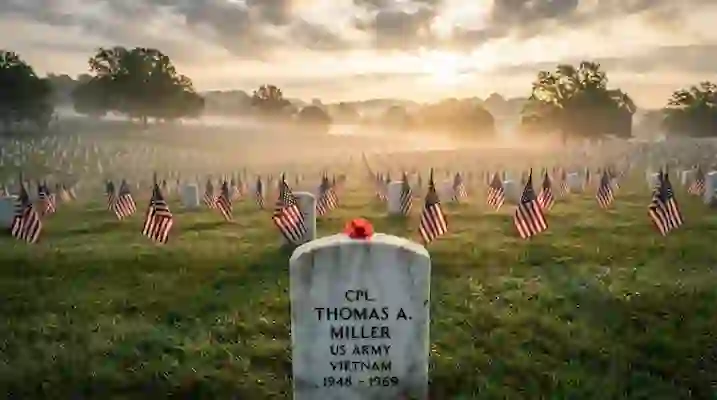
Many families make the quiet pilgrimage to national cemeteries and place small American flags on individual headstones. Arlington National Cemetery alone receives over 260,000 flags on the Thursday before the holiday weekend begins.
Others choose to wear red poppies on their lapels, a tradition borrowed from the World War I poem “In Flanders Fields.” The poppy has quietly become a visual reminder of the memorial day meaning that speaks louder than any politician’s speech ever could.
Frequently Asked Questions About Memorial Day Meaning
What actually distinguishes Veterans Day from Memorial Day?
Memorial Day exclusively honors those who died during military service. Veterans Day celebrates everyone who served, whether they are living or deceased. Mixing these two holidays up is one of the most common mistakes people make when discussing the memorial day meaning with friends and family.
Is saying “Happy Memorial Day” appropriate?
Many active-duty service members and military families find the phrase deeply uncomfortable because the memorial day meaning is rooted in grief, not celebration. A much safer and more respectful alternative is saying “I hope you have a meaningful Memorial Day” or simply acknowledging the sacrifice the day represents.
What does the flag at half-staff symbolize on Memorial Day?
The U.S. flag flies at half-staff from sunrise until noon, then rises to full-staff for the rest of the day. The morning position honors the fallen. Raising it high at noon symbolizes the living resolving not to let those sacrifices fade into forgotten history.
The Bottom Line on Memorial Day Meaning
The next time someone asks you about the memorial day meaning, skip the generic textbook answer. Tell them about the 620,000 Civil War dead. Tell them about the quarter-million flags at Arlington. Tell them about the one minute of silence at 3 PM that most Americans sleep right through.
The real memorial day meaning lives in those quiet, uncomfortable details — not in the retail sales ads or the pool party invitations. Honor the dead by actually remembering who they were and what they gave up. That is the very least any of us can do on this Monday in May.